W i n e & N a t u r e
C h i a n t i C l a s s i c o :
I t a l y ’ s f i r s t w i n e r e g i o n
Chianti Classico is more than a controlled designation of origin—it’s a landscape that becomes wine.
Nestled between Florence and Siena, this territory is the cradle of one of the world’s oldest and most celebrated winemaking traditions. Here, for centuries, Sangiovese has found its truest expression: a demanding, elegant grape capable of reflecting every nuance of the land that nurtures it.
The soils of Chianti Classico carry millennia of geological memory. The climate—with dry, breezy summers and mild winters—produces grapes that are concentrated, complex, and vibrant with natural acidity.
But Chianti Classico is also culture, balance, and time. This corner of Tuscany breathes the beauty of Renaissance art, the sobriety of medieval villages, and the wisdom of skilled hands that still follow the rhythms of the vineyard according to the seasons, not the trends.
To taste a glass of Chianti Classico is to experience more than wine: it is to connect with a place where viticulture has become a true art form.
R a d d a i n C h i a n t i :
t h e a l t i t u d e o f e l e g a n c e
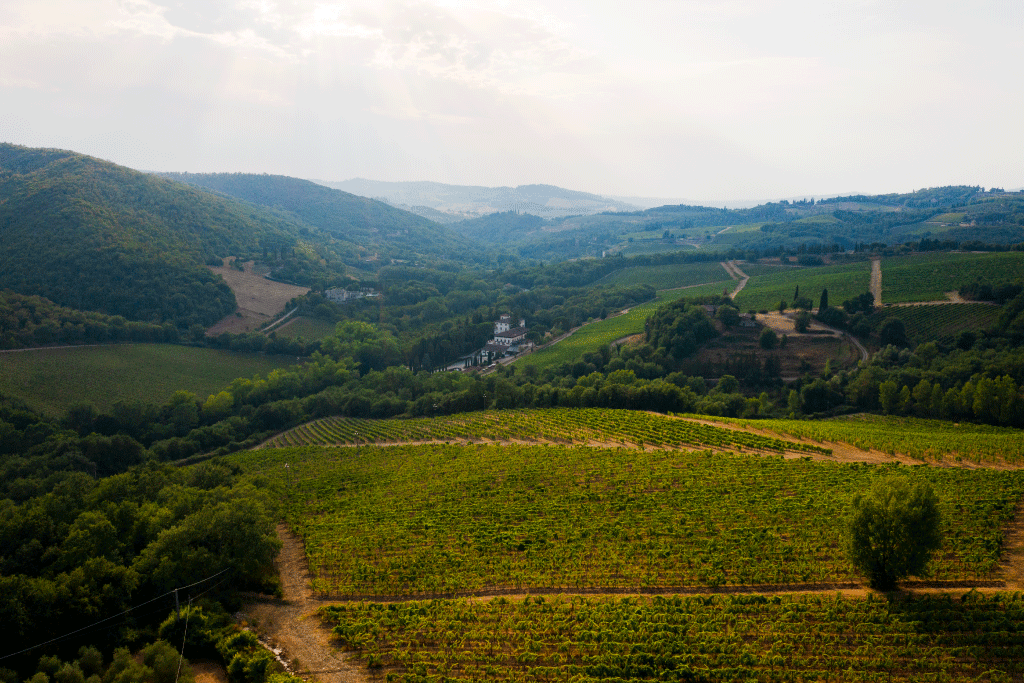
In the beating heart of Chianti Classico, Radda rises like a noble balcony over the vineyards, sitting at nearly 500 meters in elevation. Here, the air is cooler, the day-to-night temperature swings are more pronounced, and the soils are rockier and more challenging. Yet—or perhaps precisely because of this—the wines born in Radda possess a distinct soul, a singular voice in the chorus of Chianti Classico.
The Sangiovese of Radda are recognized for their refined structure, expressive verticality, and a freshness as sharp as a beam of light. They do not chase power, but rather the transparency of the fruit, mineral tension, and depth that unfolds over time.
Radda is a land that demands respect, attention, and patience. Its steep slopes require manual work, and yields are naturally modest. In return, the earth offers wines of rare integrity, faithful to the character of the vineyard and to the philosophy of those who tend it.
To wander through the vineyards of Radda is to reconnect with the most authentic essence of Chianti Classico.
T h e h i l l o f M o n t e r i n a l d i :
w h e r e h a r m o n y u n f o l d s
On the hill of Monterinaldi, each vine row tells a story of deep connection with the land. It is a place suspended between memory and the future, where viticulture is practiced with respect for nature—never rushed or forced.
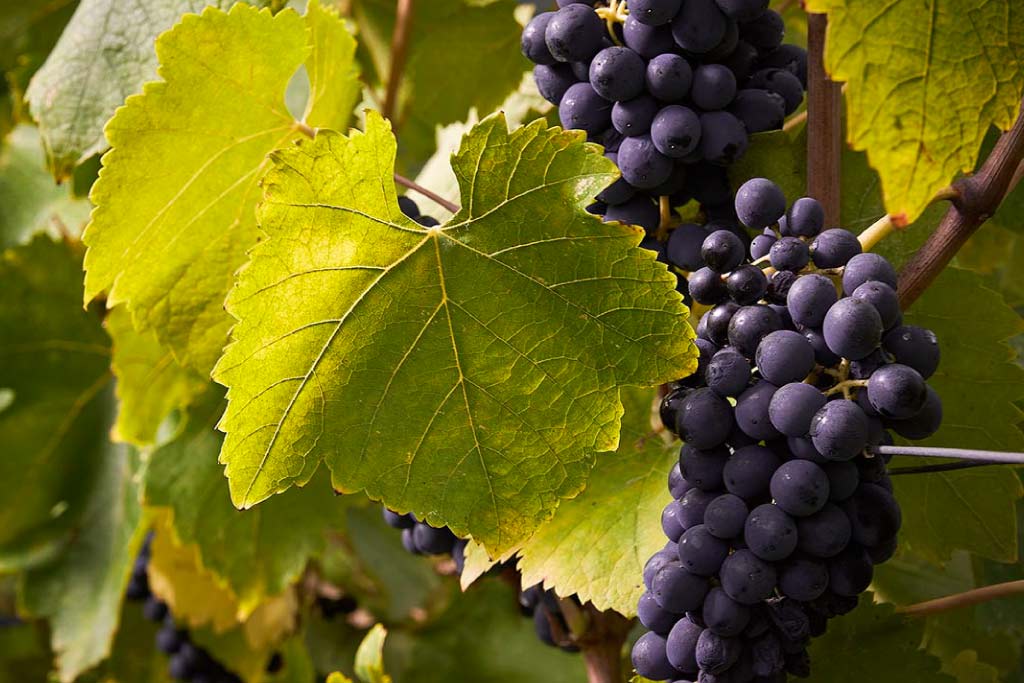
Monterinaldi is a natural amphitheater at 400 meters above sea level, facing southwest and caressed by breezes that preserve the health and vitality of the grapes. The soils—a rare combination of galestro and pietraforte—provide the perfect foundation for pure, elegant, refined Sangiovese, capable of remarkable longevity.
Beyond Sangiovese, Monterinaldi nurtures other native varieties—Canaiolo, Colorino, Malvasia Bianca, Trebbiano—as well as international grapes like Merlot and Cabernet Sauvignon, which for decades have found a rare balance here, producing wines of elegance and seamless integration.
But Monterinaldi is more than just vineyards: it is an harmonious ecosystem. The surrounding forests, the olive groves interspersed among the vines, and the Pesa river flowing at the base of the hill all contribute to a healthy, living pedoclimatic environment.
It is this biodiversity that gives our wines an expressiveness that is hard to describe but immediately perceptible in the glass—a clarity of character that is unmistakably Monterinaldi.
O u r p h i l o s o p h y i n t h e c e l l a r
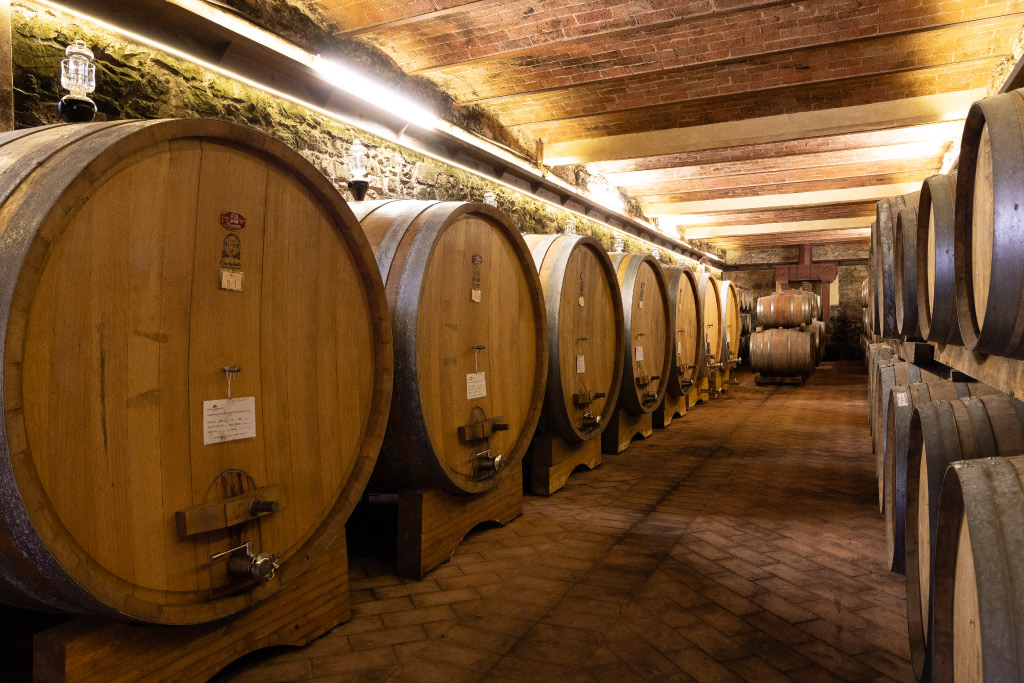
In our cellar, time is our greatest ally. We let the wine mature without haste, allowing it to reveal its deepest truth.
We believe in a respectful, essential approach—free from unnecessary interventions. Our role is not to dominate, but to guide: to observe and enhance what the grapes have chosen to express. Each vintage carries its own voice, and our role is to give it space. Our aim is to be faithful guardians of this unparalleled terroir.
Fermentations in concrete vats, slow aging, and a careful use of wood barrels—every decision is deliberate, yet never rigid. The balance between technique and intuition guides every gesture.
In the quiet of the cellar, suspended between past and present, transformation unfolds: the grapes mark the beginning of the story, to which time gives structure, and the wine—at last—finds its voice.